
Market Watch - Home Sales Declined in 2025 Compared to 2024
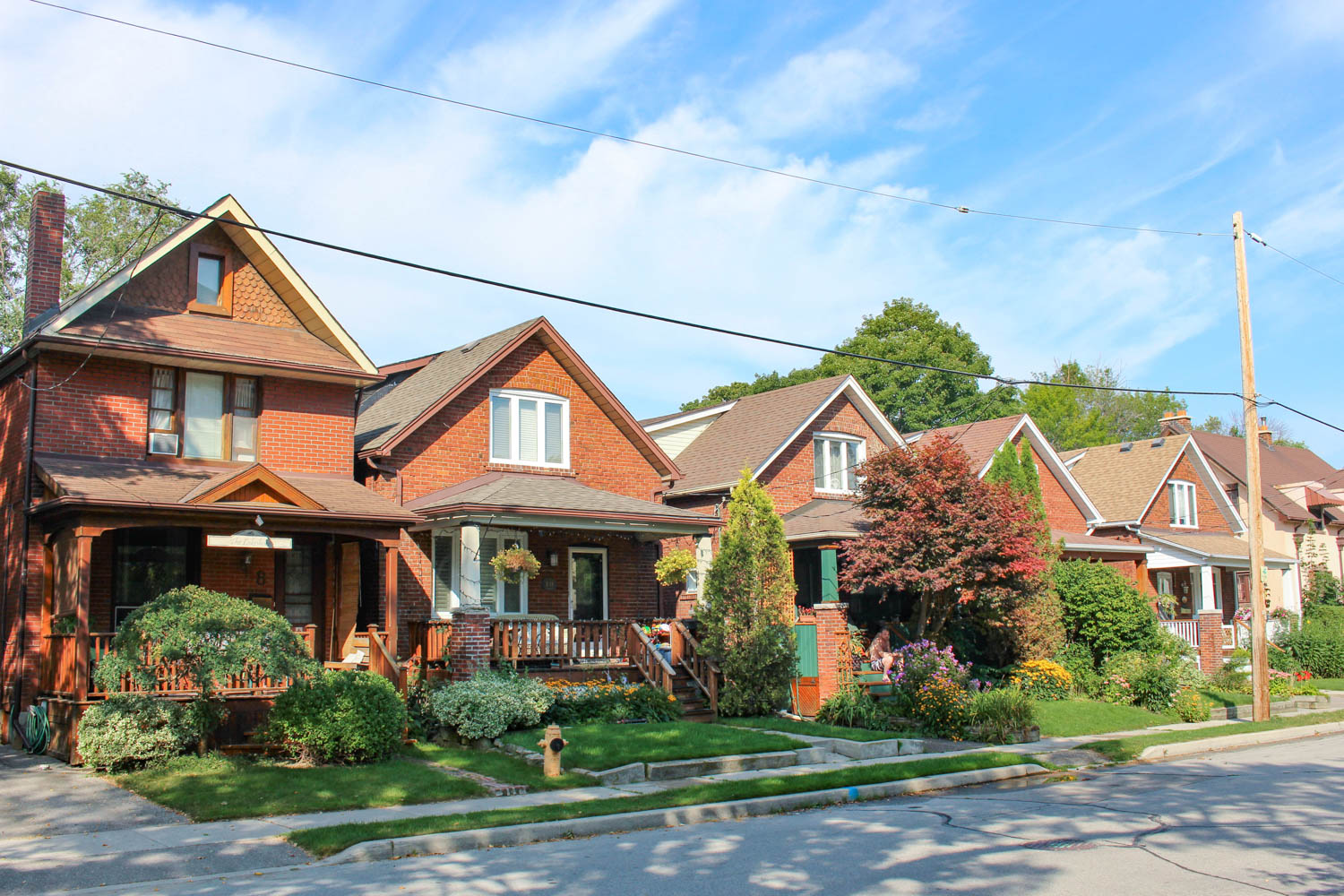
The housing market became more affordable in 2025 as selling prices and mortgage rates trended lower. Improved affordability has set the market up for recovery. Once households are convinced that the economy and labour market are on a solid footing, sales will increase as pent-up demand is satisfied.
Ontario - Home Sales Declined in 2025 Compared to 2024
Toronto, January 7, 2026 -- Annual Greater Toronto Area (GTA) home sales declined in 2025 compared to 2024, as economic uncertainty weighed on consumer confidence. Over the same period, listing inventory remained elevated, allowing for selling prices to be negotiated downward, helping improve affordability.
“The GTA housing market became more affordable in 2025 as selling prices and mortgage rates trended lower. Improved affordability has set the market up for recovery. Once households are convinced that the economy and labour market are on a solid footing, sales will increase as pent-up demand is satisfied,” said Toronto Regional Real Estate Board (TRREB) President Daniel Steinfeld.
For calendar year 2025, GTA REALTORS® reported 62,433 home sales through TRREB’s MLS® System – down by 11.2 per cent compared to 2024. New listings amounted to 186,753 – up by 10.1 per cent year-over-year. The annual average selling price in 2025 was $1,067,968 – down by 4.7 per cent compared to $1,120,241 in 2024.
There were 3,697 home sales reported in December 2025 – down by 8.9 per cent compared to December 2024. New listings entered into the MLS® System amounted to 5,299 – up by 1.8 per cent year-over-year.
The MLS® Home Price Index (MLS® HPI) Composite benchmark was down by 6.3 per cent year-over-year in December 2025. The average selling price, at $1,006,735, was down by 5.1 per cent compared to December 2024. On a seasonally adjusted basis, December home sales were down slightly month-over-month compared to November 2025, while new listings were up. The MLS® HPI composite trended slightly lower compared to November while the average selling price edged higher.
Ottawa Housing Market Closes 2025 on a Note of Stability
Ottawa, January 6, 2026 -- Ottawa’s housing market closed out the year with a typical December slowdown in activity.
Sales softened further, reinforcing the cautious tone that emerged this fall. Inventory levels declined, while prices remained broadly stable. Despite a quiet finish in November and December, annual sales in 2025 ended 1.3% higher than in 2024 by total sales, and 4.1% higher than 2024 by total dollar volume, pointing to a year defined by balance and overall stability.
The year followed an unconventional seasonal pattern, beginning with a delayed spring, transitioning into a steady summer that avoided the usual mid-year dip, and then moderating again through the fall and early winter.
Ottawa continues to show resilience compared with the price corrections seen in some larger Canadian markets. December data suggests a market that is holding steady, offering buyers more choice while maintaining generally steady conditions. That said, market performance continues to vary meaningfully by property type, with the condo segment remaining the softest area of the market.
“Even with a quieter finish to the year, Ottawa’s housing market showed real stability in 2025,” said Tami Eades, President of the Ottawa Real Estate Board. “Sales and dollar volume both surpassed 2024 levels despite more moderate conditions through the fall. That balance points to a market driven by fundamentals, not pressure.”
Residential Market Activity
In December, 587 residential properties sold, down 32% from November but consistent with typical December activity when excluding the unusually strong pandemic markets of 2020 and 2021. Since 2018, average December sales (excluding those two years) have been 583 units. While the slowdown reflects normal seasonal patterns, it also points to continued buyer caution.
On the supply side, new listings declined as expected, and active listings fell from 3,628 in November to 2,544 in December, reflecting the usual holiday-season slowdown. Even so, inventory levels remain elevated compared with recent December norms, continuing the trend seen throughout the fall of increased choice for buyers.
Since 2022, Ottawa has seen a multi-year trend across all market segments toward higher year-end inventory levels. While seasonal absorption typically limits a sharp buildup of listings in December, it has not fully offset the higher volume of inventory entering the market earlier in the year. Year-to-date active listings in December 2025 were 19% higher than last year, 45% higher than 2023, and 89% higher than in 2022. Months of inventory rose to 4.3, higher than last December and closer to long-term, pre-pandemic averages.
Prices and Market Balance
Prices remained relatively stable in December. The average residential sale price was $658,943, essentially unchanged from December 2024. This follows November’s modest year-over-year increase and reflects a market where prices are being supported, but not driven higher.
The MLS® Home Price Index offers additional context. The composite benchmark price has declined month over month since the summer, yet still finished 2025 slightly above 2024 levels overall. This suggests price adjustment is occurring gradually at the benchmark level, even as average prices continue to be influenced by the mix of homes sold.
Overall, the market remains balanced. Buyers have more leverage than in recent years, while sellers continue to benefit from steady demand and relatively resilient pricing.
Property Type Breakdown
Market conditions continue to vary meaningfully by property type.
Single-Family Homes - In December, detached homes continued to outperform townhomes and condos. Prices remained comparatively stable, with supply balanced with 4.3 months of inventory. The single-family benchmark price posted a 0.4% year-over-year increase, underscoring the resilience of this segment. Limited availability and consistent demand continue to support detached homes, which remain the anchor of Ottawa’s market stability.
Townhomes - Townhomes continue to adjust as inventory levels remain slightly elevated. Sales activity has been more resilient than in the apartment segment, though pricing pressure is becoming more apparent. The townhouse benchmark price declined 3.7% year over year, the average sale price fell just 1.4%. This gap suggests that softness has been more pronounced at the benchmark level than in actual transactions. Sales mix and sustained interest from first-time buyers, who continue to view townhomes as a more accessible entry point, have helped support average and median prices.
Apartments (Condos) - The apartment segment remains the softest part of the Ottawa market, with December data reinforcing trends seen in November. Sales activity remained subdued, while months of inventory climbed to nearly eight, well above balanced levels.
The apartment benchmark price declined on a year-over-year basis, reflecting growing supply relative to demand. While Ottawa has not seen the level of condo oversupply present in larger urban markets, the trajectory remains one to monitor closely.
As Ottawa enters the new year, December’s data suggests that any improvement in activity is likely to be gradual rather than immediate. Interest rate relief has helped support confidence, but buyers continue to move carefully, keeping a close eye on broader economic conditions. A period of modest ups and downs within an overall theme of stability appears likely for 2026.
While close monitoring of the oversupplied condo apartment segment remains important, the broader message for REALTORS® and consumers is consistent: Ottawa’s housing market remains stable, segmented by property type, and increasingly shaped by fundamentals rather than urgency.
British Columbia - 2025 Saw Lowest Annual Sales Total in Over Two Decades
Vancouver, 6 January 2026 -- Home sales registered in the Multiple Listing Service® (MLS®) in Metro Vancouver* finished the year down 10 per cent, marking the lowest annual sales total in over twenty years.
The Greater Vancouver REALTORS® (GVR) reports that residential sales in the region totalled 23,800 in 2025, a 10.4 per cent decrease from the 26,561 sales recorded in 2024, and a 9.3 per cent decrease from the 26,249 sales in 2023.
Last year’s sales total was 24.7 per cent below the 10-year annual sales average (31,625).
"This year was one for the history books. Although the sales total was the lowest in over two decades, Realtors were still busy listing properties. Sellers brought the highest total of listings to market on record since the mid-1990s, eclipsing the previous record high in 2008 by a little over 1,000 listings."
Andrew Lis, GVR chief economist and vice-president of data analytics
Properties listed on the MLS® in Metro Vancouver totalled 65,335 in 2025. This represents an 8.2 per cent increase compared to the 60,388 properties listed in 2024. This was 28.4 per cent above the 50,893 properties listed in 2023.
The total number of properties listed last year was 13.1 per cent above the region’s 10-year total annual average of (57,782).
Currently, the total number of homes listed for sale on the MLS® system in Metro Vancouver is 12,550, a 14.6 per cent increase compared to December 2024 (10,948). This is 34.8 per cent above the 10-year seasonal average (9,308).
“The forecast we put out last January noted a foreseeable downside risk, which while prescient, unfortunately materialized in 2025,” said Lis. “Specifically, we noted that trade tensions with the USA could negatively impact sales and prices, and this downside risk came to pass. The upshot, however, is that the negative impact of these trade tensions appears to be easing, and consumer sentiment has improved modestly over the second half of the year.”
The MLS® Home Price Index composite benchmark price for all residential properties in Metro Vancouver is currently $1,114,800. This represents a 4.5 per cent decrease over December 2024 and a 0.8 per cent decrease compared to November 2025.
“With sales down and inventory remaining plentiful, prices eased across all property types since the start of 2025. Sales and prices weren’t the only metrics that came down; borrowing costs fell nearly one full percentage point,” said Lis. “With lower prices, lower borrowing costs, and plenty of inventory to choose from, homebuyers in 2026 are starting the year with favourable conditions. Whether these conditions translate into a market with stronger demand will be the million-dollar question – and we’ll be monitoring this story closely as it unfolds.”
Residential property sales in Metro Vancouver
Residential sales in the region totalled 1,537 in December 2025, a 12.9 per cent decrease from the 1,765 sales recorded in December 2024. This was 20.7 per cent below the 10-year seasonal average (1,937).
There were 1,849 detached, attached and apartment properties newly listed for sale on the MLS® in Metro Vancouver in December 2025. This represents a 10.3 per cent increase compared to the 1,676 properties listed in December 2024. This was 10.3 per cent above the 10-year seasonal average (1,677).
Across all detached, attached and apartment property types, the sales-to-active listings ratio for December 2025 is 12.7 per cent. By property type, the ratio is 9.3 per cent for detached homes, 14.6 per cent for attached, and 15.1 per cent for apartments.
Analysis of the historical data suggests downward pressure on home prices occurs when the ratio dips below 12 per cent for a sustained period, while home prices often experience upward pressure when it surpasses 20 per cent over several months.
Sales of detached homes in December 2025 reached 431, a 12.8 per cent decrease from the 494 detached sales recorded in December 2024. The benchmark price for a detached home is $1,879,800. This represents a 5.3 per cent decrease from December 2024 and a 1.1 per cent decrease compared to November 2025.
Sales of apartment homes reached 791 in December 2025, a 11.2 per cent decrease compared to the 891 sales in December 2024. The benchmark price of an apartment home is $710,000. This represents a 5.3 per cent decrease from December 2024 and a 0.6 per cent decrease compared to November 2025.
Attached home sales in December 2025 totalled 303, an 18.3 per cent decrease compared to the 371 sales in December 2024. The benchmark price of a townhouse is $1,056,600. This represents a five per cent decrease from December 2024 and a 0.8 per cent decrease compared to November 2025.
Alberta - 2025 Housing Market Shifted to More Balanced Conditions
Calgary, Alberta, Jan. 2, 2026 – Following several years of strong price growth, 2025 marked a year of transition thanks to strong demand and limited supply. Due to record-high starts, supply levels improved across all aspects of the housing market, just as demand pressure eased due to a reduction in migration levels and heightened uncertainty that persisted throughout the spring market. This helped shift the resale market from one that favoured the seller to one that was more balanced.
In 2025, sales reached 22,751 units, down 16 per cent over last year, but in line with long-term trends. Much of the shift came from the growth in supply. 2025 saw over 40,000 new listings come onto the market, nine per cent higher than last year, causing inventories to rise and driving more balanced conditions.
“Supply levels were expected to rise in 2025. However, the growth was higher than expected, especially for apartment condominiums and row homes. This weighed on prices in those sectors enough to offset the annual gains reported for both detached and semi-detached homes,” said Ann-Marie Lurie, CREB®’s Chief Economist. "Adjustments in both supply and demand varied across the city, with pockets of the market continuing to experience seller’s market conditions versus some areas where the conditions favoured the buyer. This resulted in different price trends based on location, price range and property type.”
Overall, the annual average total residential benchmark price in 2025 was $577,492, two per cent lower than last year’s annual average. However, annual detached and semi-detached prices rose by a respective one and three per cent, while apartment and row homes saw prices fall by a respective three and two per cent.
Compared to other districts, the North East reported the largest decline in prices this year. While some of this is related to improved supply across all areas of the city, it is also important to note that the North East district also reported the strongest price growth over the past two years.
For the first time in three years, we are heading into the New Year with better inventory levels. Details on what is expected to happen in the market in 2026 will be released at CREB®’s annual Forecast Conference on Jan. 20, 2026.
Detached - Detached sales totaled 11,328 in 2025, down by nearly nine per cent compared to last year. Sales eased across all districts in the city, with the steepest declines occurring in the North East, East and City Centre district. However, unlike the City Centre, the North East and East districts also experienced significant gains in inventory compared to long-term trends, driving annual price declines of two per cent. Meanwhile, in the City Centre detached inventory remained well below long-term averages, which likely prevented stronger sales and contributed to the annual price growth of over three per cent. Despite the differing conditions in different areas of the city, slowing sales and rising supply citywide helped move the market into balanced conditions by the second half of the year. The annual average benchmark price was $752,767, one per cent higher than last year’s annual level.
Semi-Detached - Semi-detached homes represent the smallest segment of the market, accounting for less than 10 per cent of all sales activity. Sales in 2025 were 2,159, eight per cent lower than last year, but slightly higher than long-term trends. Trends for semi-detached homes have been relatively consistent with the detached market. However, it took longer for this segment of the market to shift to more balanced conditions, resulting in stronger annual price gains. In 2025, the average annual benchmark price was $685,850, nearly three per cent higher than last year. Prices did ease in the North district as competition for new homes weighed on resale activity, but the decline in this district was more than offset by the four per cent gain in the City Centre.
Row - 2025 sales eased by 17 per cent to 3,838 units. Despite the decline, sales were still higher than long-term trends, as row homes are starting to account for a larger share of the overall activity in the city. At the same time, new listings also rose relative to sales, driving inventory gains and taking the pressure off prices. Conditions shifted to more balanced levels relatively early in the year, and by the last quarter, conditions ranged from a balanced to a buyer’s market depending on the districts of the city. Overall, this contributed to the annual average benchmark price decline of two per cent. While prices were relatively stable in the City Centre, North West, West and East districts, additional supply in the resale market and competition from new homes caused prices to decline by four per cent in the North East and North districts.
Apartment Condominium - Apartment-style homes reported the largest adjustment in price in 2025. Sales declined by 28 per cent compared to the near record high levels achieved last year. While the decline was significant, sales were still over 28 per cent higher than long-term trends. The main cause of the shift in conditions was due to the supply. Over the past three years, there has been a rise in apartment-style starts. While most of the apartment starts were purpose-built rental, they are adding to the supply choice and weighing on the resale market. Resale condominiums saw the market shift in favour of buyers by the second half of the year, with elevated months of supply being reported in most districts of the city. This resulted in relatively persistent downward pressure on prices, causing the annual average benchmark price to decline by nearly three per cent. Price declines were the steepest in the North East, nearing five per cent. The only area to report relative stability in the annual price was in the West district.
REGIONAL MARKET FACTS
Airdrie - Increased competition from the new home market, along with more supply options in competing resale markets, has contributed to the added supply in the resale market in Airdrie. Following four consecutive years of exceptionally low inventory levels, 2025 saw inventory rise to levels not seen since prior to the pandemic. While sales activity did remain in line with long-term trends despite an annual decline, the push up in inventories caused the months of supply to generally rise throughout the year. Overall, the annual average benchmark price eased by two per cent this year.
Cochrane - Sales in Cochrane were similar to last year and above long-term trends. While demand stayed relatively strong in the town, steady gains in supply did cause conditions to shift to a more balanced state by the end of 2025. With the shift occurring later in the year, we did not see the same downward pressure on prices. In fact, on an annual basis, the benchmark price in Cochrane was $578,325, nearly three per cent higher than last year. Cochrane also tends to see a larger share of newer properties being listed and sold on the resale market, impacting the prices in the resale market.
Okotoks - Okotoks continued to struggle with supply growth. Inventories did rise by over 40 per cent, but levels were exceptionally low last year. Even with the gain in 2025, levels were still 30 per cent below long-term trends. Sales activity in the town remained consistent with the levels reported last year and was higher than long-term trends. The persistently low inventory levels generally kept market conditions relatively tight. However, total residential prices posted only a modest gain over last year; this is likely due to compositional shifts as price growth ranged from over one per cent for detached homes to nearly eight per cent for apartment condominium product.
